








Get Involved

Food Allergy Awareness Month
May is Food Allergy Awareness Month, part of the Asthma and Allergy Foundation of America’s (AAFA) National Asthma and Allergy Awareness Month. It’s a time to help people learn about food allergies and related allergic diseases, risk factors, symptoms, and treatment.
Countdown to Food Allergy Awareness Month
Day(s)
:
Hour(s)
:
Minute(s)
:
Second(s)
The Power of Community to Improve Food Allergy Care
Food allergies aren’t managed in isolation — they’re shaped by where you live, access to allergy-friendly food, and the people around you. Preventing allergic reactions (such as anaphylaxis, a rapid and severe reaction) takes more than avoiding food allergens. It takes a community.
Your community of support includes everyone who influences your child’s health and well-being: family and friends, your health care team, school staff, local neighbors, advocates, and lawmakers. When that community shows up for your child, the difference is real. You can experience:
- Easier food allergen identification and avoidance
- Healthier, more inclusive spaces at home, school, and work
- Access to more treatment options
- Stronger protections and policies that improve quality of life
The Asthma and Allergy Foundation of America (AAFA) is the nation’s oldest and largest nonprofit dedicated to saving lives and improving quality of life for people with asthma and allergic diseases. AAFA offers extensive support for individuals and families, empowering you with practical tools to identify triggers, manage symptoms, and live fully.
For parents of children with food allergies, AAFA’s Kids with Food Allergies (KFA) community provides specialized resources and a network of families who understand what you’re going through.
AAFA and KFA are part of your community of support — helping you control your food allergies and other allergic conditions so you can live, sleep, learn, work, and play to your fullest.
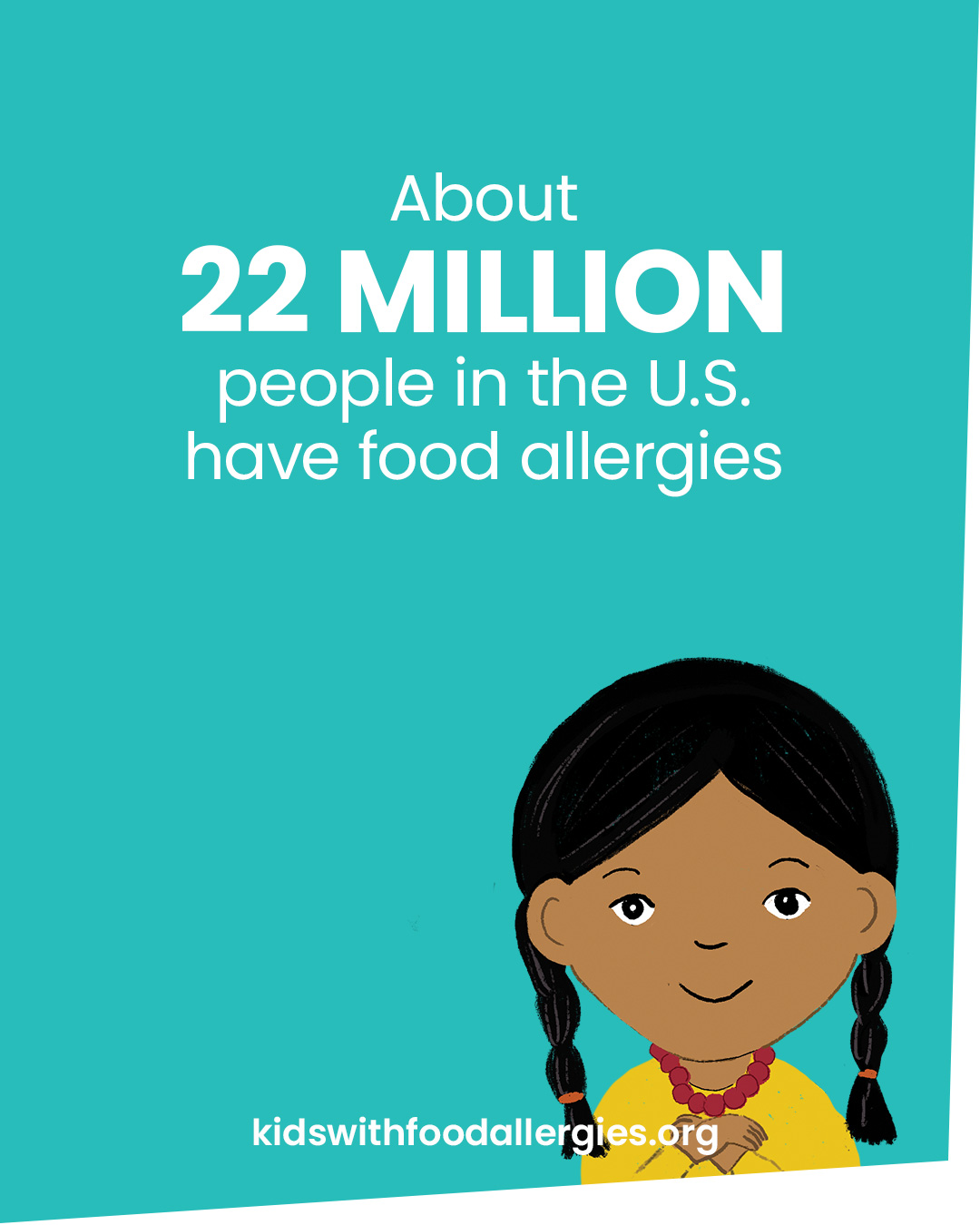
About 22 million people in the United States have food allergies (4 million are children).

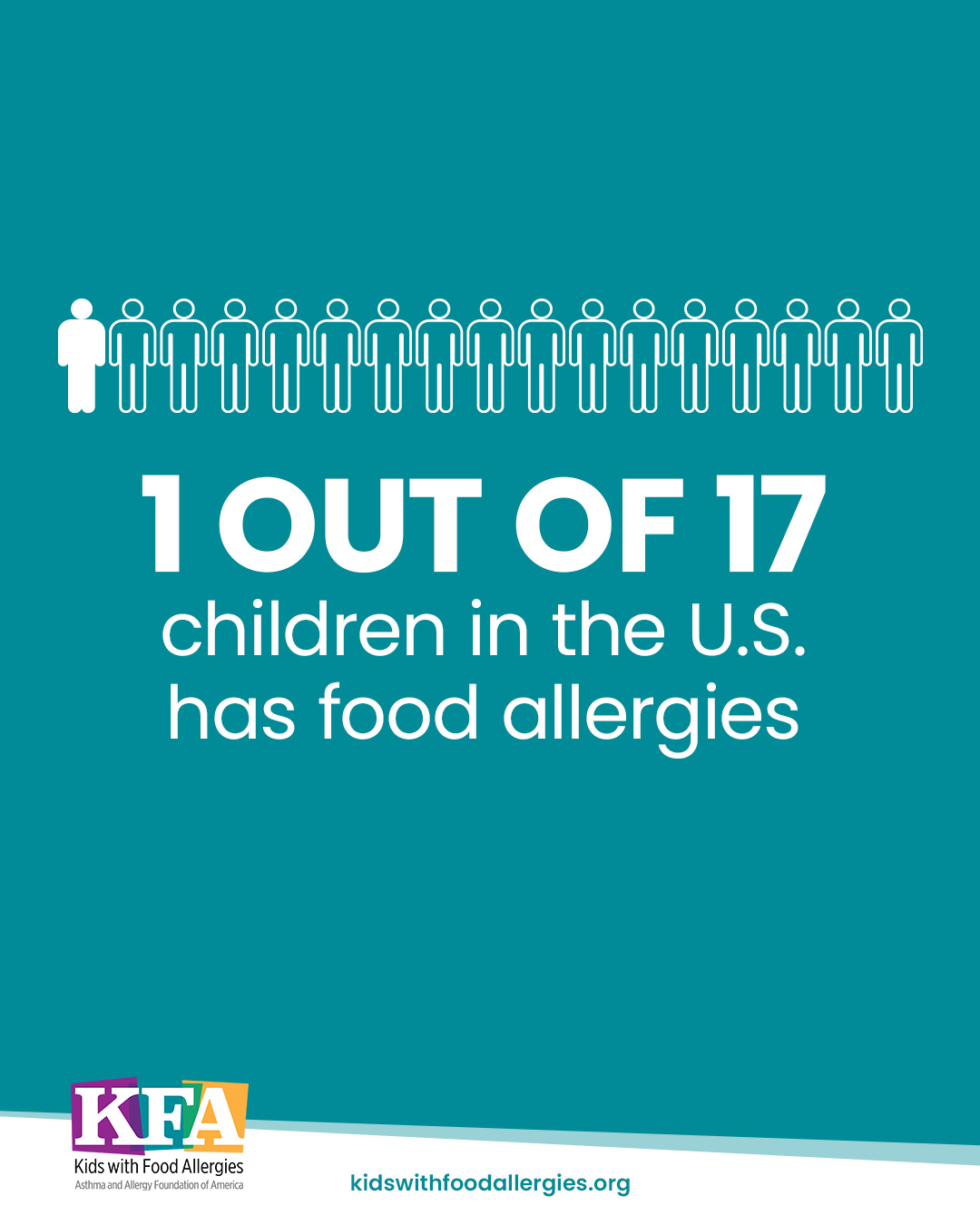
1 in 17
children in the U.S. have food allergies
50,000
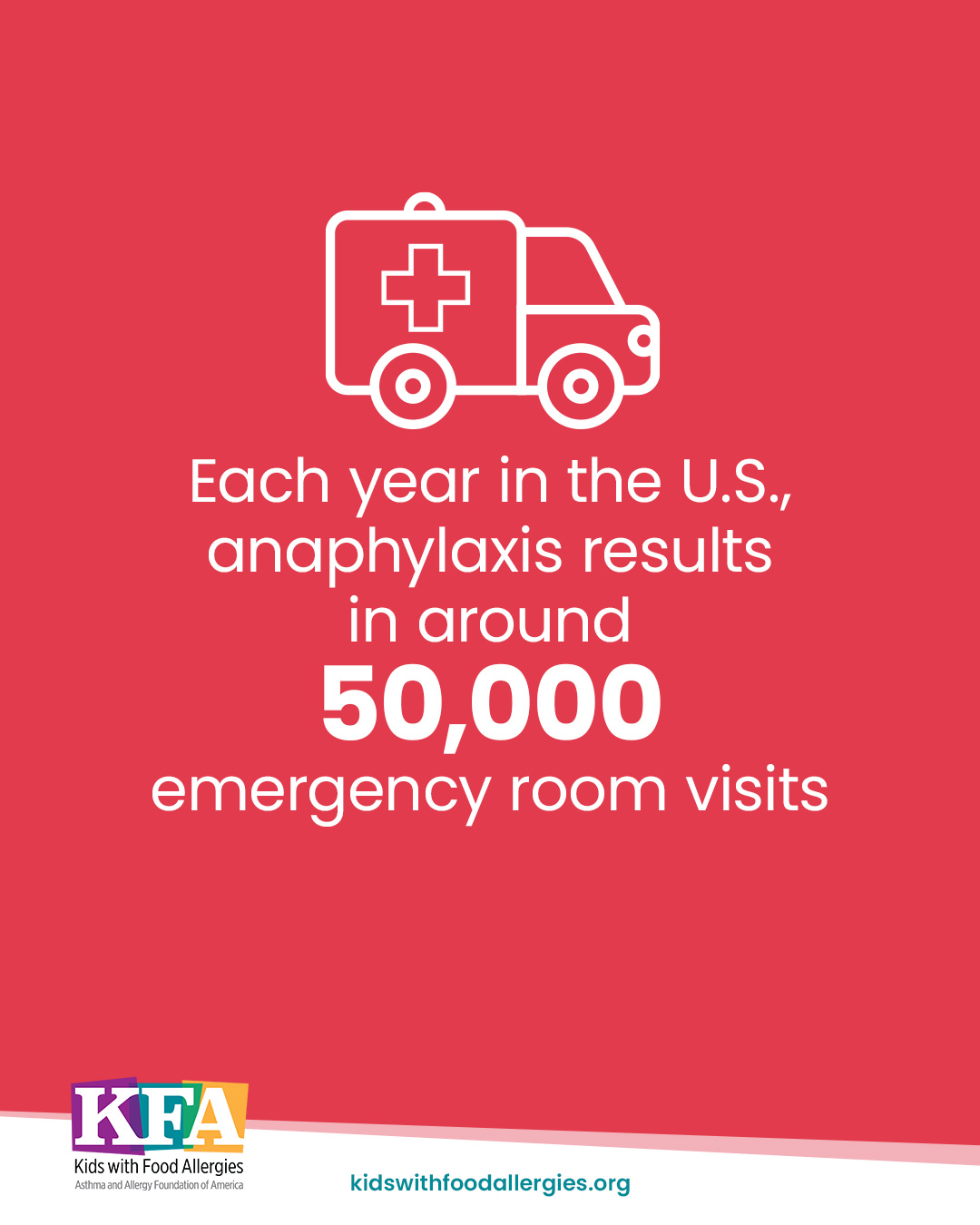
emergency room visits each year in the U.S. due to anaphylaxis

$317B
is the amount food allergies may cost the U.S. each year
Social Media Tools
This toolkit contains facts and resources that anyone can use to raise awareness about food allergies.
Follow AAFA’s food allergy division, Kids with Food Allergies (KFA), on social media and use the hashtag #FoodAllergyAwareness when you share these resources.
Facebook: Kids with Food Allergies
Instagram: Kids with Food Allergies
LinkedIn: AAFA National
TikTok: FoodAllergyToks (KFA)
BlueSky: Kids with Food Allergies
YouTube: Kids with Food Allergies
Hidden
Facts and Stats
More than 106 million people in the United States have asthma and/or allergies. Some people may have more than 1 of these conditions.
- About 22 million people in the U.S. have food allergies (4 million are children).1,2
- Any food can cause food allergy. The most common food allergens in the United States are peanuts, tree nuts, milk, eggs, fish, shellfish, wheat, soy, and sesame.3
- Each year in the U.S., it is estimated that anaphylaxis (to drugs, food, or venom) results in 50,000 emergency room visits.4
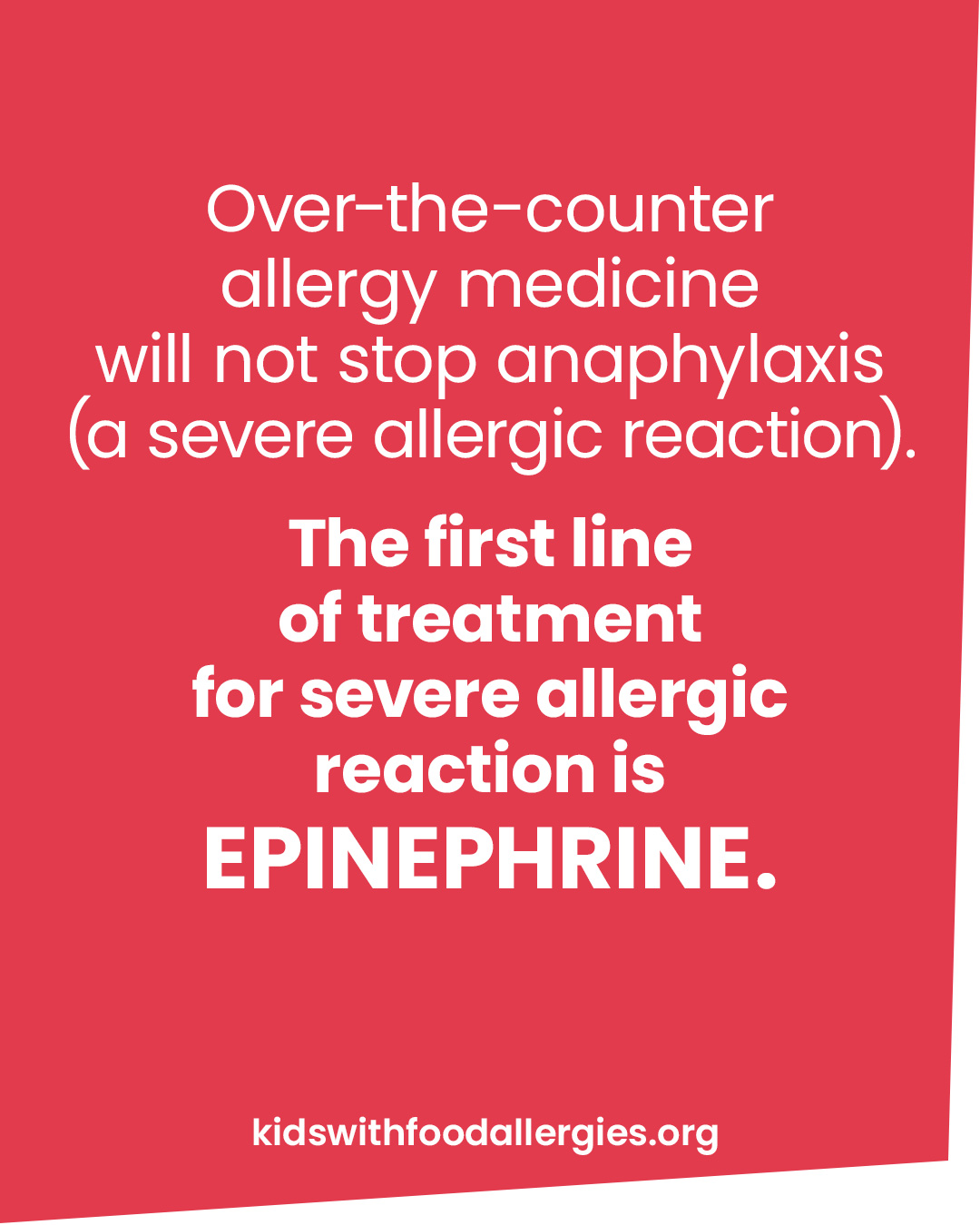
- Severe allergic reactions to food need prompt treatment with epinephrine.5
- Although new treatments are being developed, there is currently no cure for food allergies.3
For more detailed data and information about allergic conditions, visit:
- Food Allergy Facts
- Allergy Facts (Asthma and Allergy Foundation of America website)
Or use our printable pages:
Download PDFs

Shareable Images
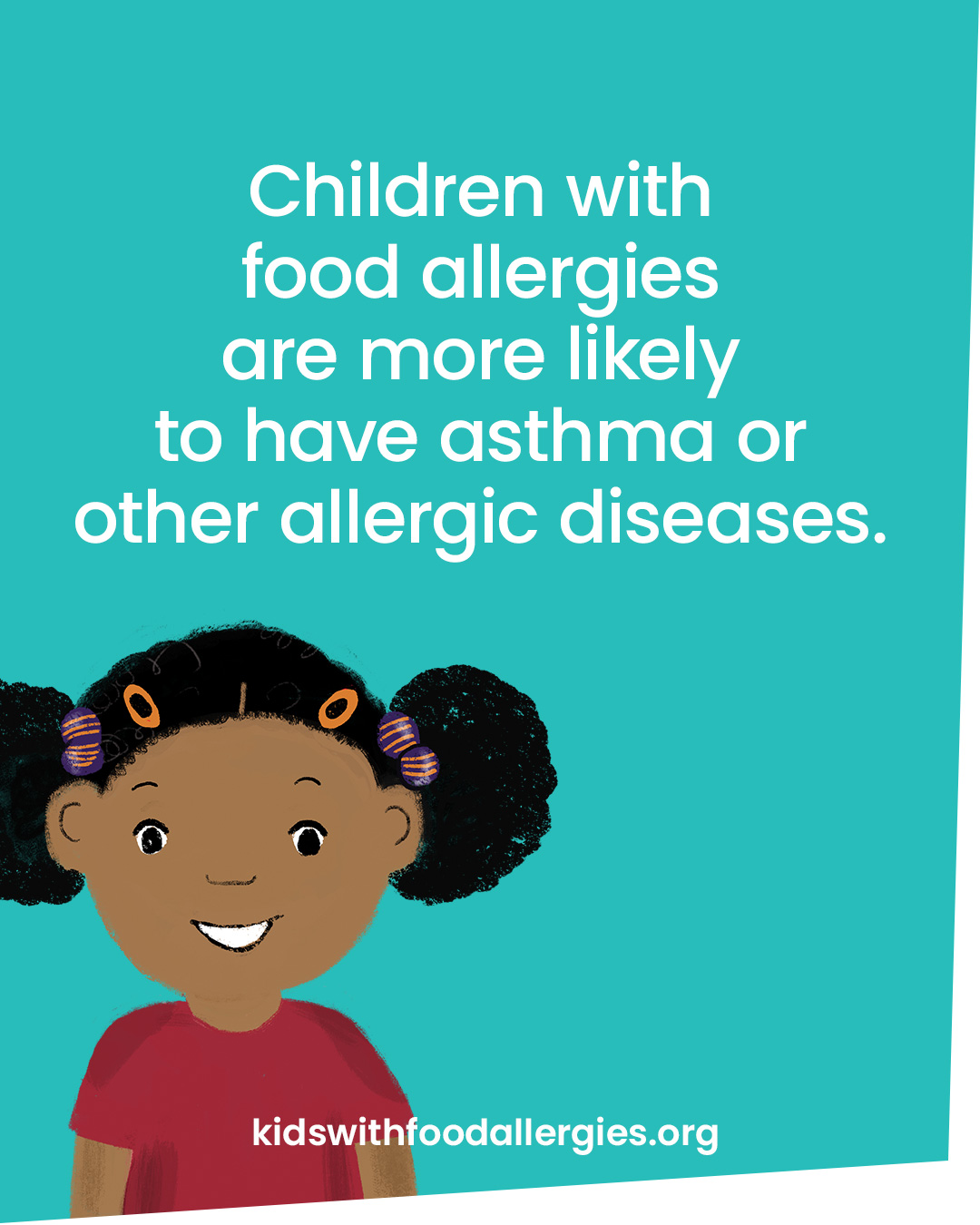
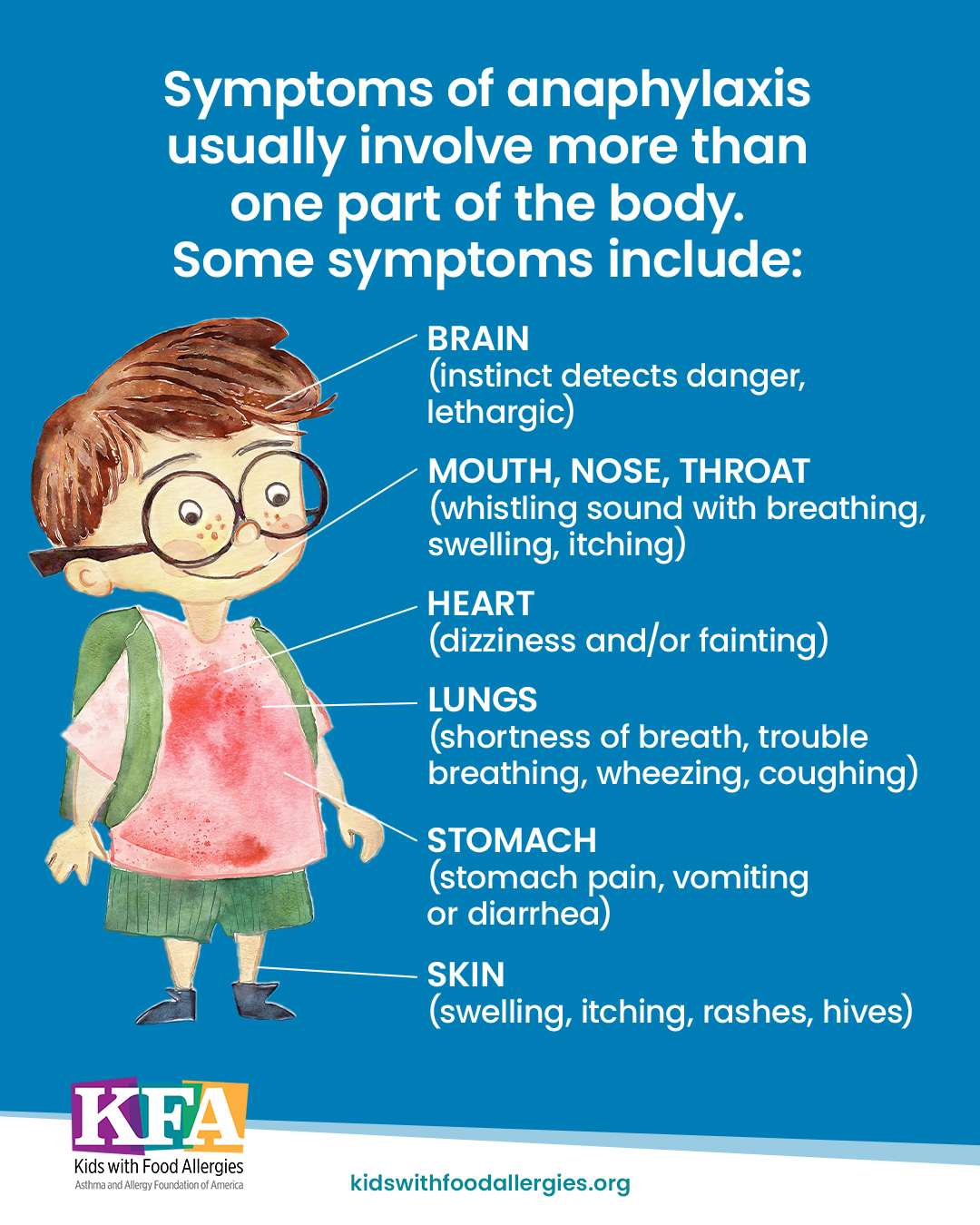
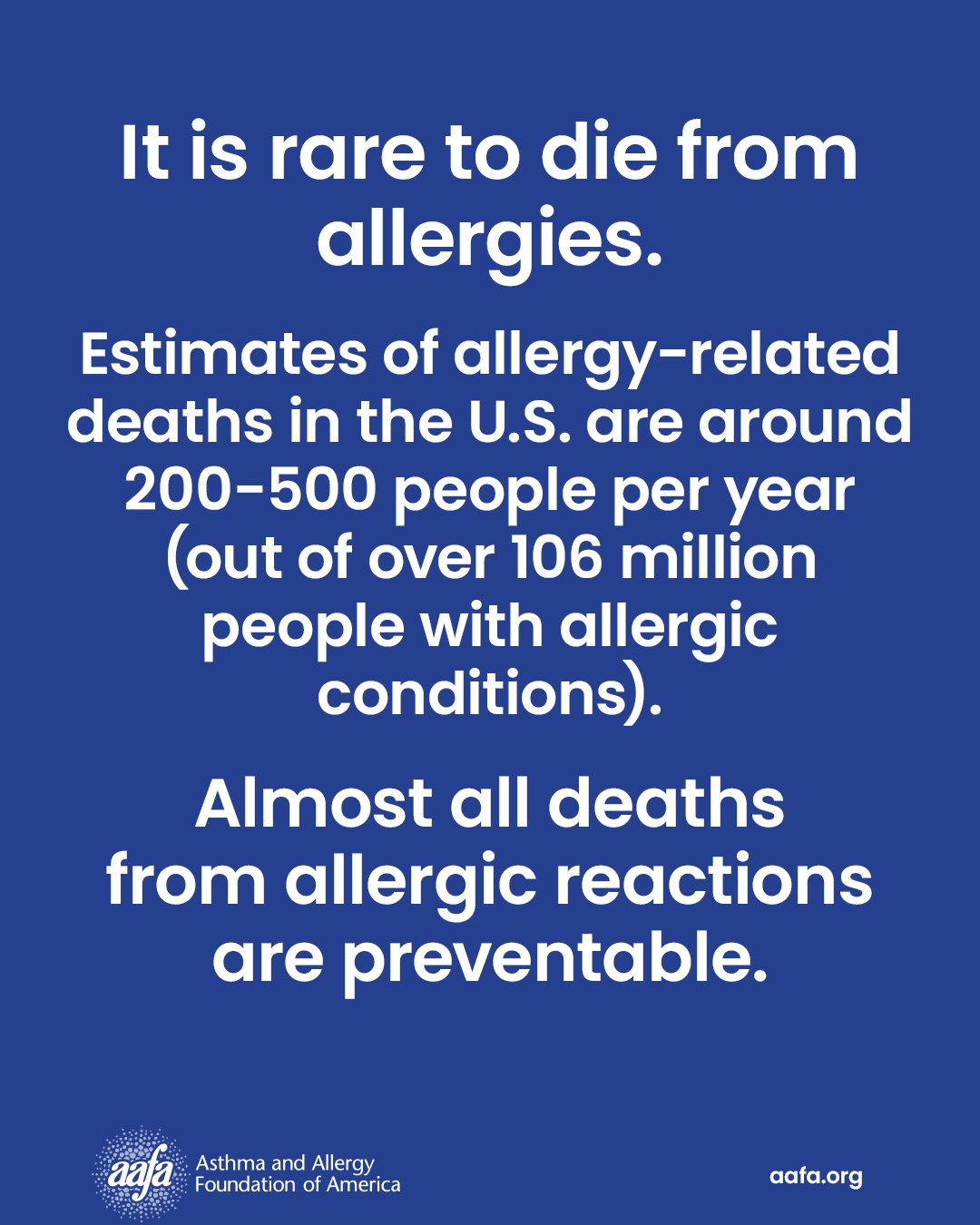
You can download these images and copy the caption to post to social media. We have many shareable images throughout our website. Here are some examples that help show how common food allergies are and their impact on communities:
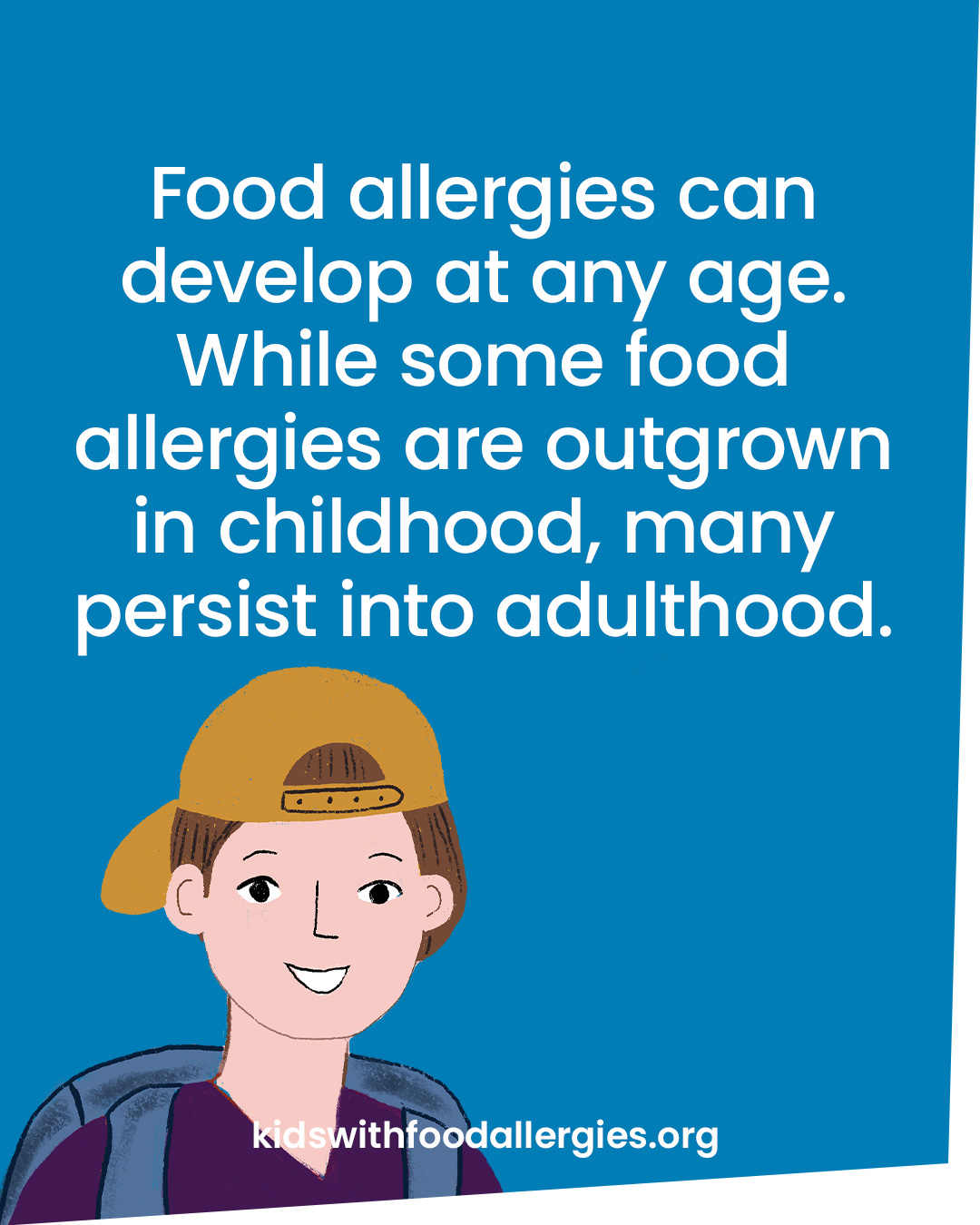
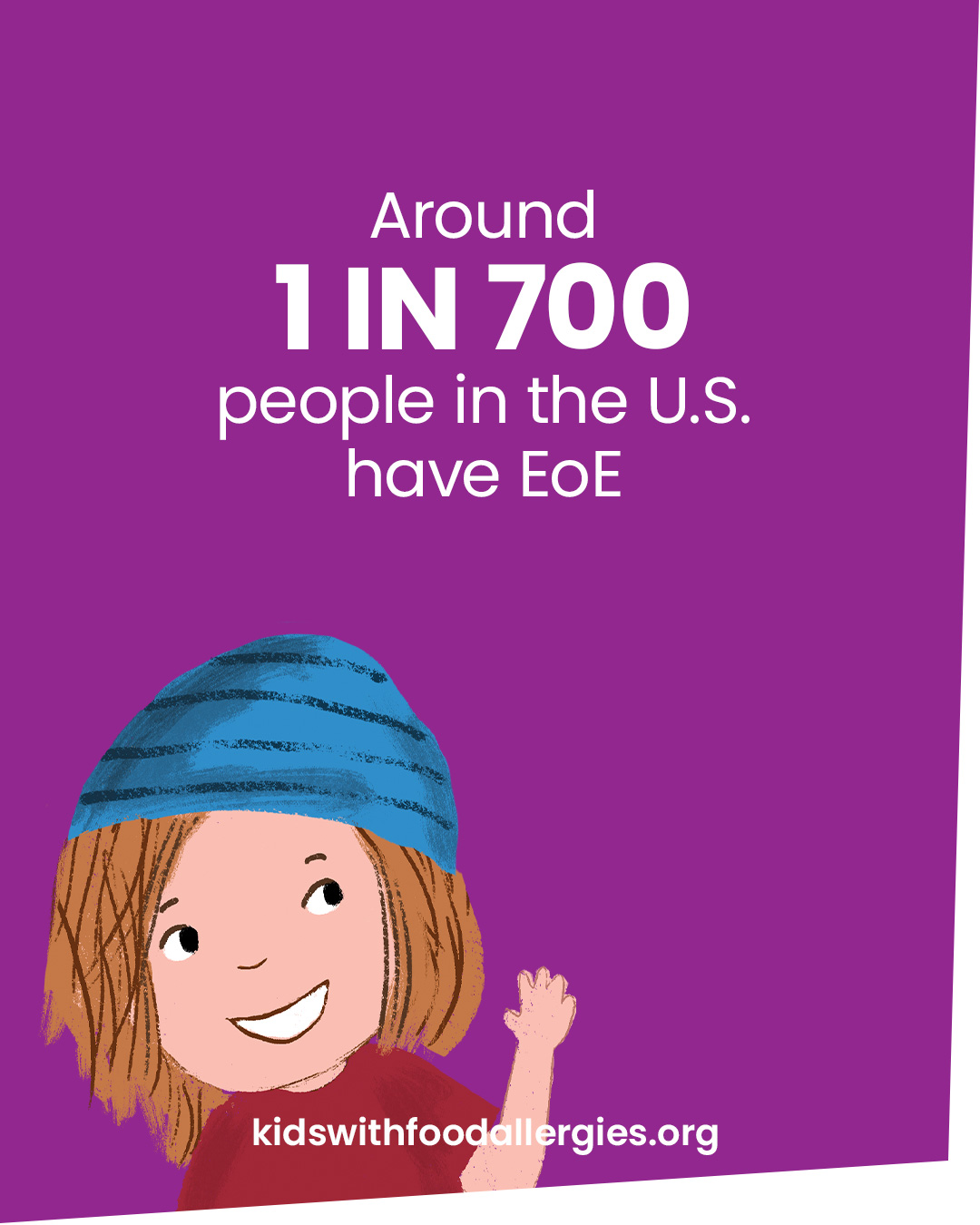
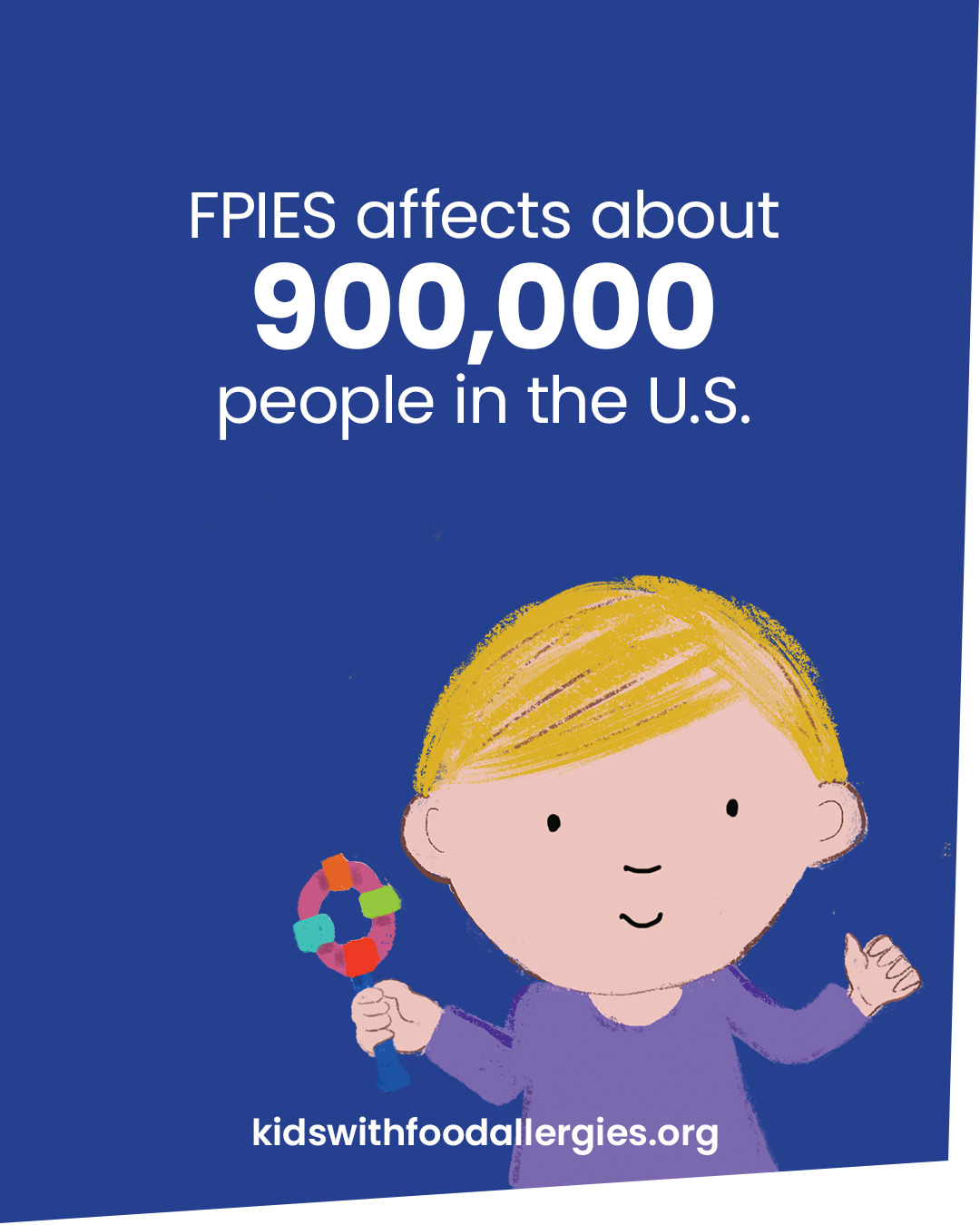
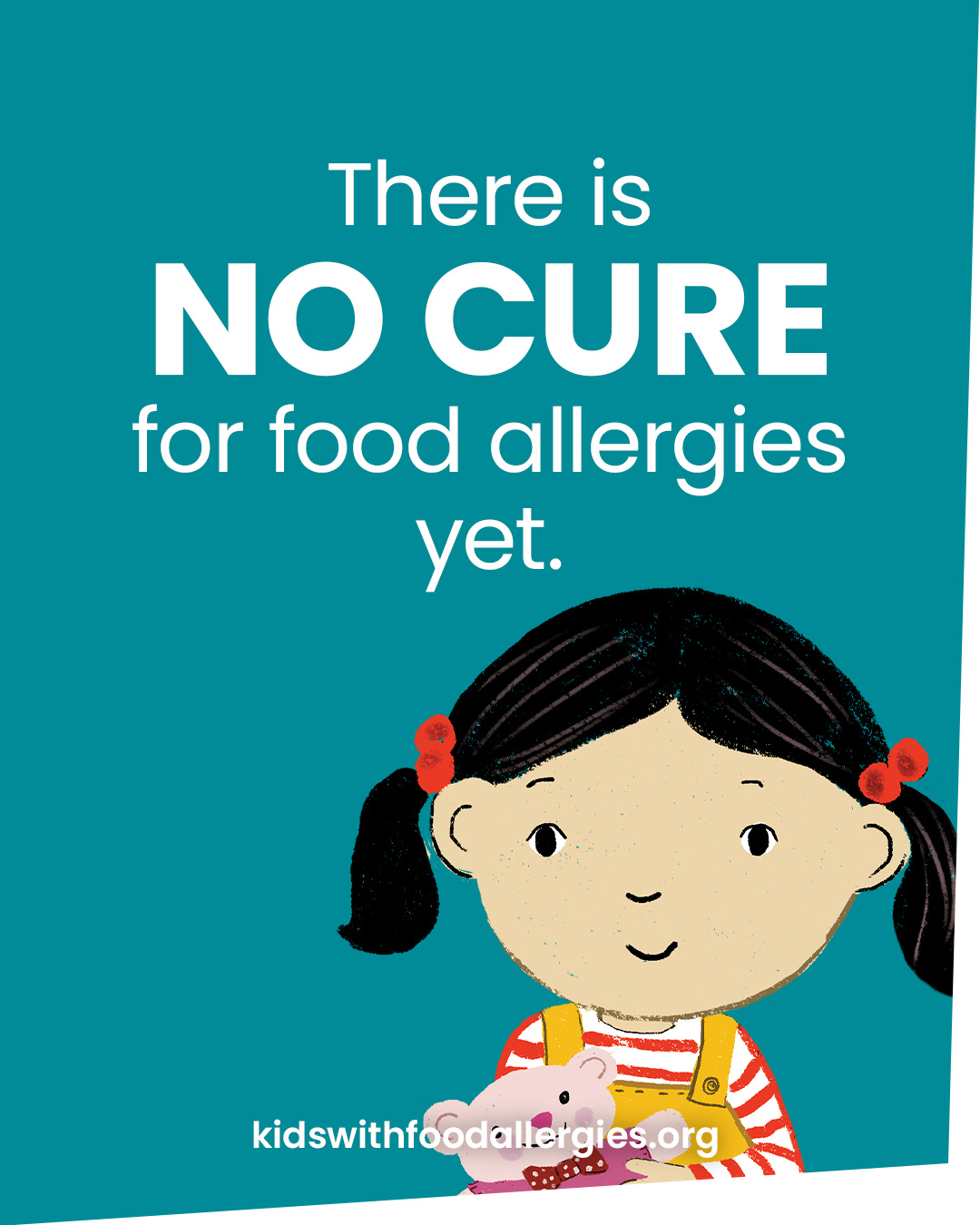
Awareness Ribbons
Help raise visibility on food allergies, eosinophilic esophagitis (EoE), and FPIES by posting these on your social media channels or changing your profile pics for the month of May!
Hidden
Advocacy Action
 Advocacy is speaking out on issues that you care about or offering your opinion and suggestions for how to improve something to the people who are in control. It is important for policymakers to hear directly from you about your experiences.
Visit AAFA’s Advocacy Action Center to see current bills and regulations that affect the allergy and asthma community and learn how you can take action.
References
- David B.K. Golden, Wang, J., Waserman, S., Akin, C., Campbell, R. L., Ellis, A. K., Greenhawt, M., Lang, D. M., Ledford, D. K., Lieberman, J., Oppenheimer, J., Shaker, M., Wallace, D., Abrams, E. M., Bernstein, J. A., Chu, D. K., Horner, C. C., Rank, M. A., Stukus, D. R., & Burrows, A. G. (2023). Anaphylaxis: A 2023 practice parameter update. Annals of Allergy Asthma & Immunology. 132(2), 124-176. https://doi.org/10.1016/j.anai.2023.09.015
- Bottoms-McClain, L., Giri, A., & Ng, A. (2026). Diagnosed Allergic Conditions Among Adults: United States, 2024. Centers for Disease Control and Prevention, National Center for Health Statistics. https://doi.org/10.15620/cdc/174634
- Ng, A., Giri, A., & Bottoms-McClain, L. (2026). Diagnosed Allergic Conditions Among Children Ages 0−17 Years: United States, 2024. Centers for Disease Control and Prevention, National Center for Health Statistics. https://doi.org/10.15620/cdc/174635
- S. Food & Drug Administration. (2025). Food Allergies. U.S. Department of Health and Human Services. https://www.fda.gov/food/nutrition-food-labeling-and-critical-foods/food-allergies
- Michelson, K. A., Dribin, T. E., Vyles, D., & Neuman, M. I. (2020). Trends in emergency care for anaphylaxis. The Journal of Allergy and Clinical Immunology: In Practice, 8(2), 767-768.e2. https://doi.org/10.1016/j.jaip.2019.07.018
Acknowledgement
Awareness month materials are developed independently by Kids with Food Allergies and the Asthma and Allergy Foundation of America, and made possible in part by contributions from Genentech, Sanofi, and Regeneron. We thank them for their support of food allergy and EoE awareness for 2026.

Events
-
-

Food Allergy Awareness Month 2026
During National Asthma and Allergy Awareness Month, we also focus on food allergy awareness. A food allergy occurs when the body’s immune system sees a certain food as harmful and […]
-
Bounce Into Food Allergy Awareness – Issaquah, Washington
Kokanee Shelter at Lake Sammamish State Park 2182 NW Sammamish Rd, Issaquah, WA, United StatesKokanee Shelter at Lake Sammamish State Park, Issaquah, Washington Note: There is a fee to park. Join us for a day of community, education, and fun! The King Family and […]
-
Food Allergy Buddies – Boston, Massachusetts
Museum of Science 1 Science Pk, Boston, MA, United States -
National Eosinophil Awareness Week 2026
AAFA joins the American Partnership for Eosinophilic Disorders (APFED) in recognizing National Eosinophil Awareness Week, May 17-23, 2026. The purpose of this week is to create awareness and educate both […]
-
Type 2 Inflammation Awareness Week 2026
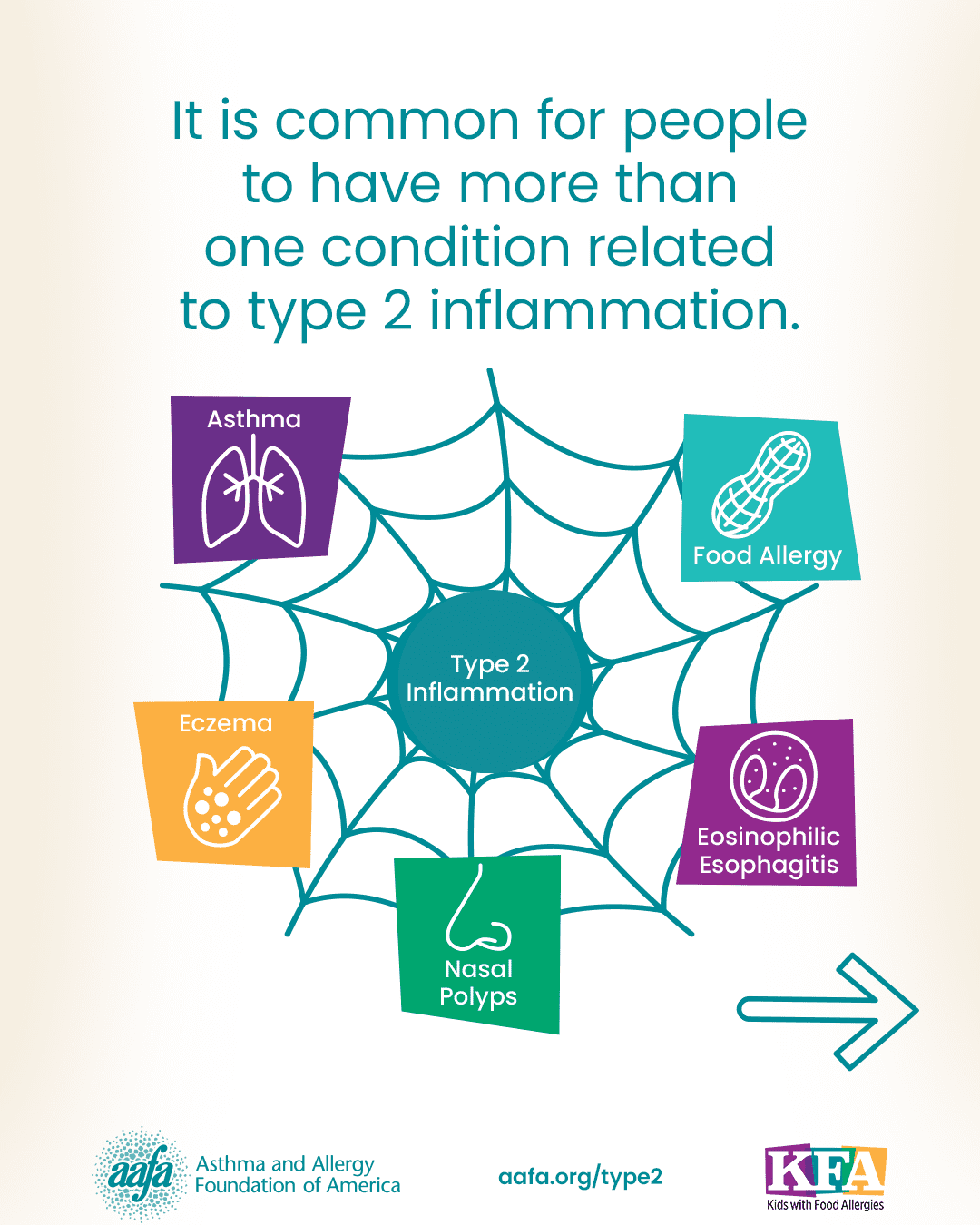
The Asthma and Allergy Foundation of America (AAFA) designates May 18-22 to be Type 2 Inflammation Awareness Week. Conditions such as asthma, allergies, eczema, eosinophilic esophagitis (EoE), and nasal polyps are […]
-
World EoE Day 2026
AAFA joins the EoE Day Alliance in recognizing World Eosinophilic Esophagitis (EoE) Day on May 22, 2026. The theme selected for World EoE Day 2026 is “Food Should Not Hurt.” What […]
-
AAFA Remembrance Day 2026
On May 28, 2026, of National Asthma and Allergy Awareness Month, the Asthma and Allergy Foundation of America (AAFA) and our division Kids with Food Allergies (KFA) are holding a Remembrance Day […]
-
Sacramento Food Allergy Awareness Walk – Sacramento, California
California State Capitol Park West Side Front Lawn 1300 L St., Sacramento, CA, United StatesBuild a Dine Allergy Safe Future For the first time in U.S. history, large restaurant chains in California will be required to label the top 9 allergens on menus, starting […]
$10

Explore Our Resources